Understanding people. Unlocking potential.
Mental Health, Wellbeing and Resilience
Build confidence in mental health conversations and healthier ways of working
When someone is struggling, knowing how to start a conversation can make a difference. When a team is under sustained pressure, it also needs space to examine how it works. Partnering Minds offers mental health learning alongside separate coaching and development conversations about mental fitness and resilience.
What it is
Choose support that fits the need.
MHFA England training helps people recognise possible signs of poor mental health, listen without judgement and signpost to appropriate support. It develops first aid knowledge and skills; it does not train someone to diagnose or treat mental illness. Resilience coaching has a different purpose: helping people reflect on pressures, habits, boundaries and support, and decide what to change.
MHFA England training
A provider-defined learning route for people supporting others. The Mental Health First Aid course comprises four sessions totalling 14 hours, online or face to face, to suit your needs.
Mental Fitness and Resilience
Separate Partnering Minds coaching or facilitated development. Here, mental fitness means practical habits that support reflection, recovery and day-to-day functioning; it is not a clinical test, diagnosis or MHFA England qualification.
Healthier team practices
Facilitated conversations about demands, priorities, relationships and support. Personal development should sit alongside action on the conditions people work in.
Confident managers
Practical training and coaching for line managers on noticing changes in people, starting supportive conversations and knowing where to signpost, so support doesn’t depend on one person.
MHFA England training
Accredited to deliver.
I'm a certified MHFA England Instructor Trainer, accredited to deliver the following courses, in person or online, for organisations of any size.
Not sure which course fits? Tell me about your people and I'll help you choose.

Mental Health Aware
Ideal for: Whole organisation
Half day · virtual or face to face
Lay the groundwork by introducing the idea of talking about mental health. This tackles stigma and empowers people to use the other initiatives and supports you are putting in place.

MHFA Champions
Ideal for: Line managers
One day · virtual or face to face
Equip your line managers with the skills and confidence to spot when someone on their team is struggling, and to know how and when to offer support.

Mental Health First Aiders
Ideal for: Staff at every level
Two days or four half days · virtual or face to face
Demonstrate your commitment to equality between mental and physical health by training an equal number of Mental Health First Aiders as physical first aiders.
MHFA Refresher
Ideal for: MHFA Aiders, Champions and anyone who needs to update their knowledge on mental health and how best to support
Four hours · virtual or face to face
Keep the momentum with refresher training for your MHFAiders and Champions, so their knowledge stays fresh and they can continue to support the needs of your organisation. Refreshing every three years is recommended.
MHFA for Managers
Ideal for: People managers
Designed for managers
Recognise signs of poor mental health in a team, have supportive conversations and create a psychologically safe workplace.
Mental Health Skills for Managers
Ideal for: People managers
A shorter course
Practical skills to support your team's mental health and wellbeing day to day.
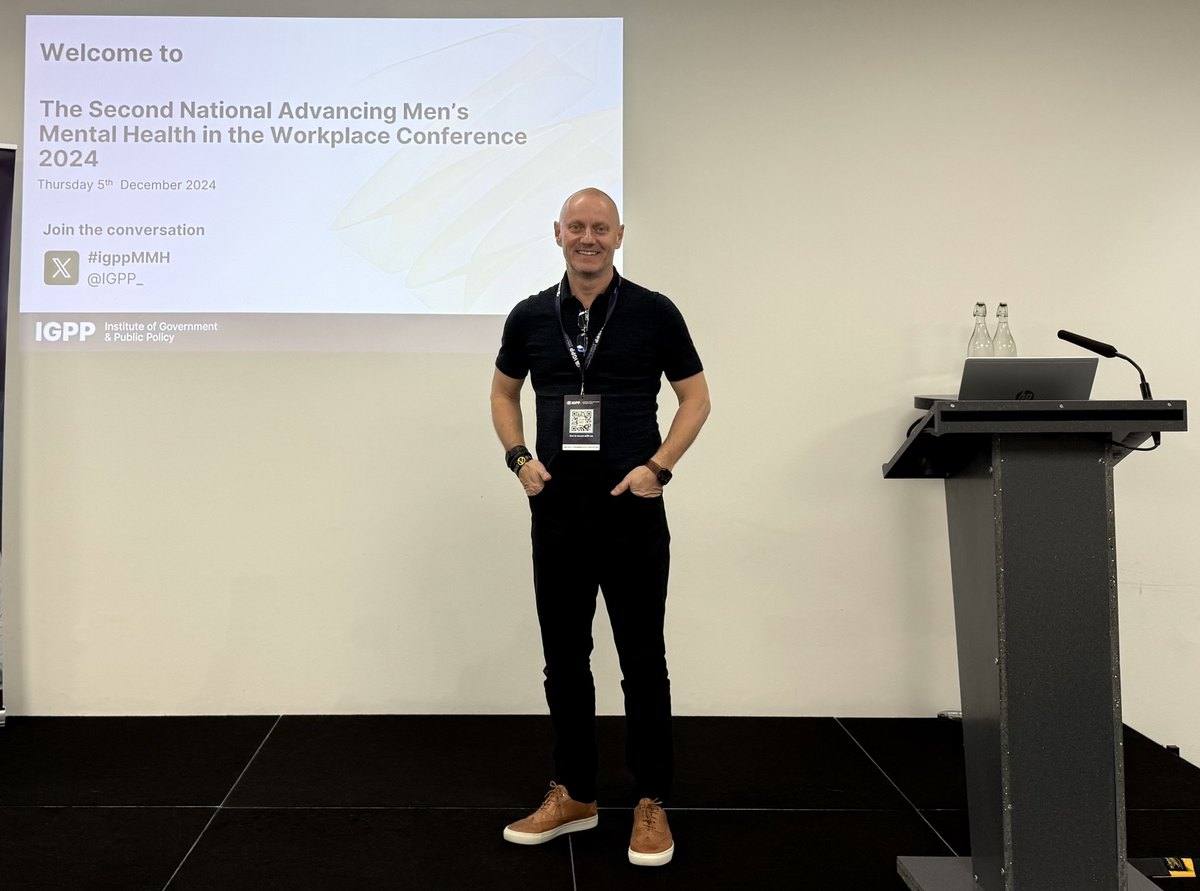
Speaking
Talking about men’s mental health at work.
In December 2024 I was invited to speak at the Second National Advancing Men’s Mental Health in the Workplace Conference, hosted by the Institute of Government & Public Policy.
It’s a subject close to my heart. Men are often the least likely to ask for help, and the workplace can be one of the best places to start the conversation. I bring that experience into every course, talk and session I run, whether it’s a keynote, a team briefing or MHFA training.
Men’s Support and Wellbeing ›
Free white paper
The conversation that matters: why your line managers need mental health first aid skills
The evidence on mental health at work, why managers are the front line, and the human skills that make the difference. Drawing on the ONS, HSE, CIPD, Deloitte, Mind, Samaritans and MHFA England.
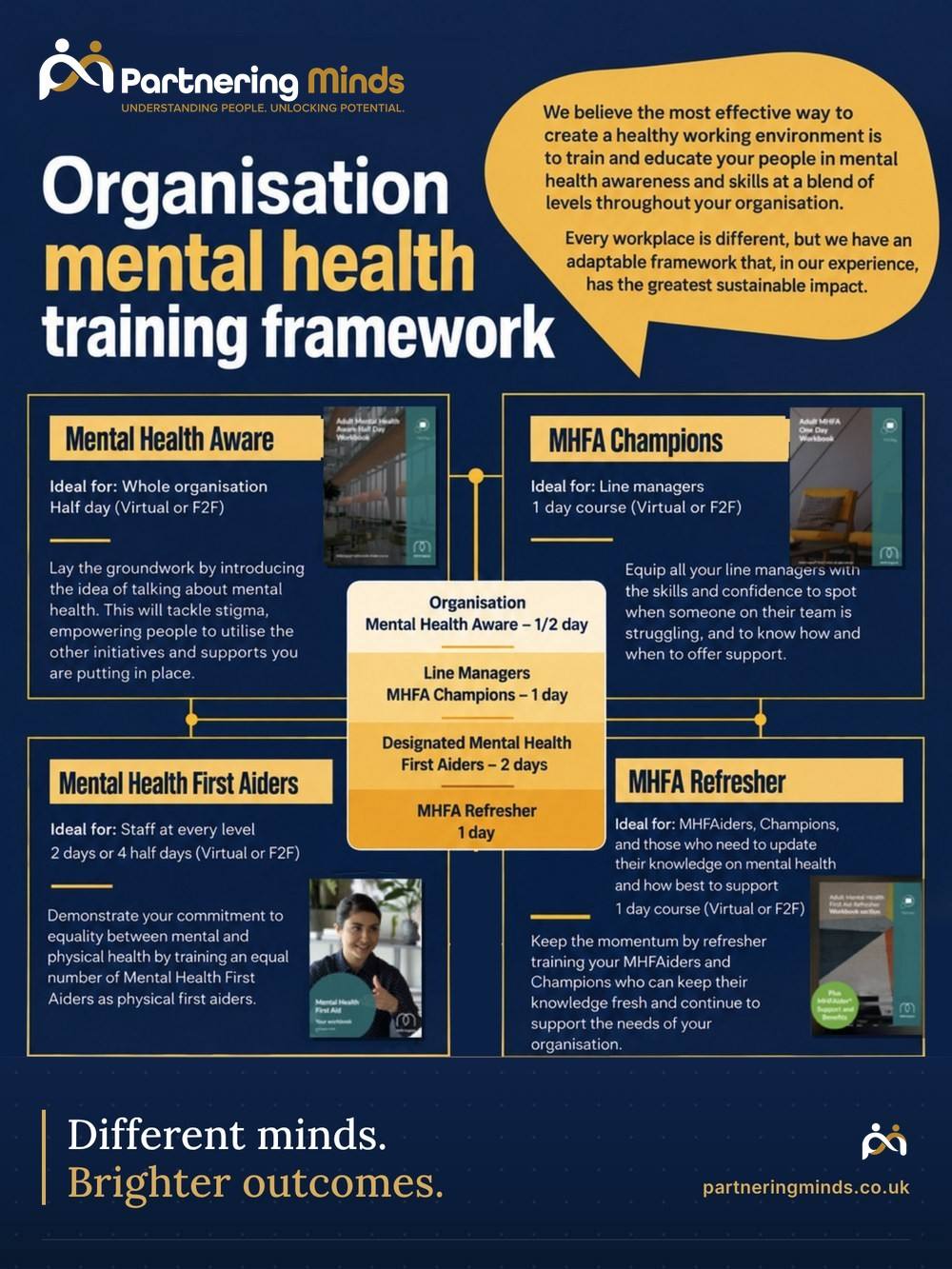
A blend of levels
A mental health training framework suitable for all organisations.
Mental Health Aware for the whole organisation, MHFA Champions for line managers, Mental Health First Aiders at every level, and refreshers to keep skills current. Every workplace is different, so we adapt the mix to yours.
From understanding to practical progress
Supporting people to work well and feel well.
Start a more useful conversation
Build confidence to notice, ask and listen within the limits of your role.
Know the next step
Understand the boundaries of first aid and the importance of appropriate support.
Create room for practical change
Look at individual habits and team working conditions together, then agree actions people can use.
Build resilience over time
Explore routines, boundaries and recovery that help people keep going well through demanding periods.
Where it can help
Where this can make a difference.
Organisations developing MHFAiders
Choose suitable volunteers and clarify the role before training. Plan time, visibility, support and referral routes so the role is sustainable after the course.
Managers wanting better conversations
Explore how to listen, respond respectfully and connect colleagues with support. Decide whether an MHFA England course or a separate facilitated workshop fits the purpose; they do not award the same certification.
Leaders under sustained pressure
Use separate coaching to examine early warning signs, boundaries, recovery, priorities and sources of support. Agree small changes within the person’s influence and identify issues requiring organisational action.
Teams facing change or overload
Discuss what is creating pressure, how work is allocated and what needs to stop or change. Use the HSE areas of demands, control, support, relationships, role and change as prompts.
People teams shaping a wellbeing approach
Join up training, policies, manager support and signposting so the whole offer makes sense to staff. Decide where first aid skills, coaching and organisational action each have a part to play.
New and first-time managers
Build early confidence in noticing change, having a supportive first conversation and knowing the limits of the role, before problems become entrenched.
Leaflets
Wellbeing and resilience at a glance.
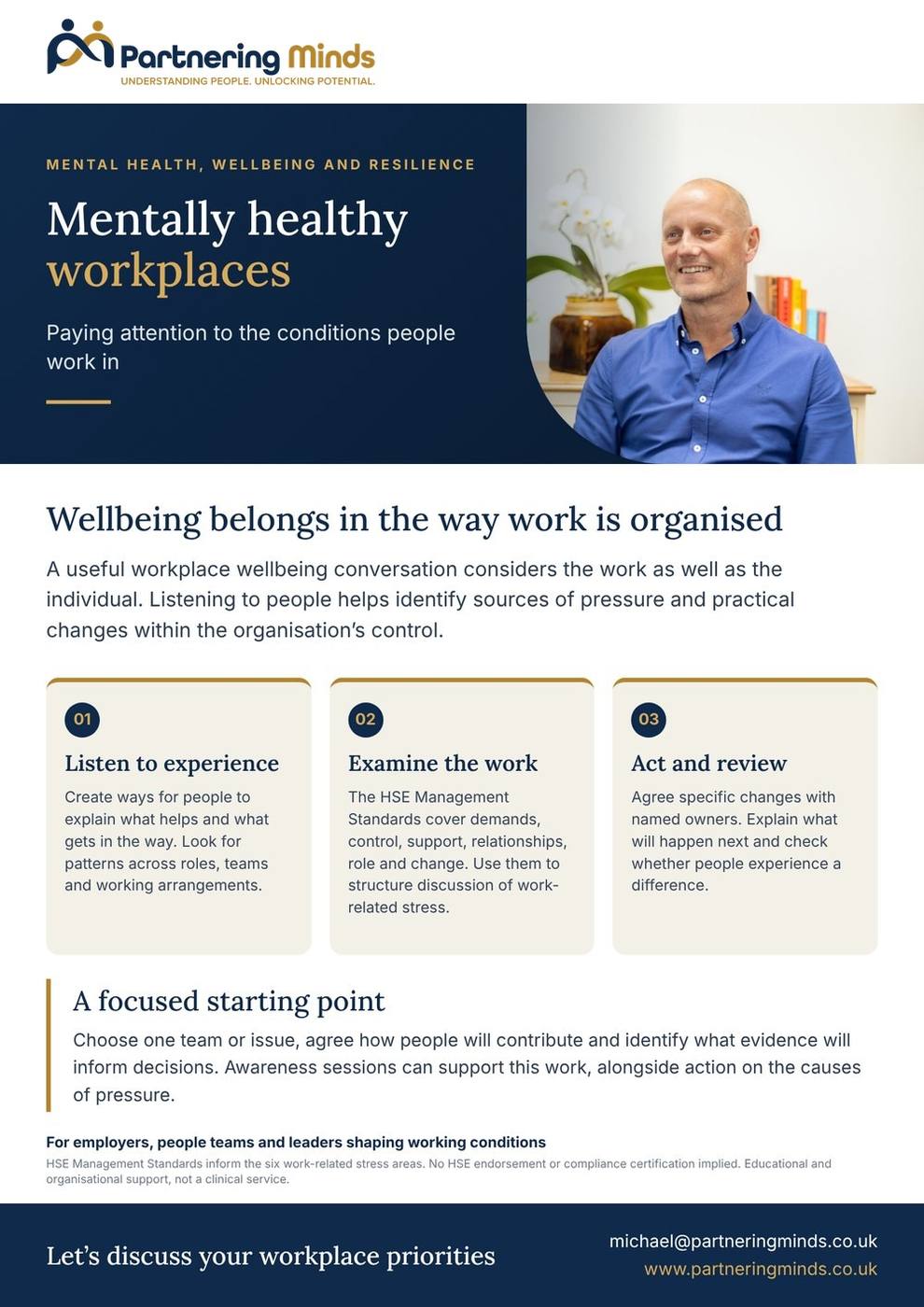
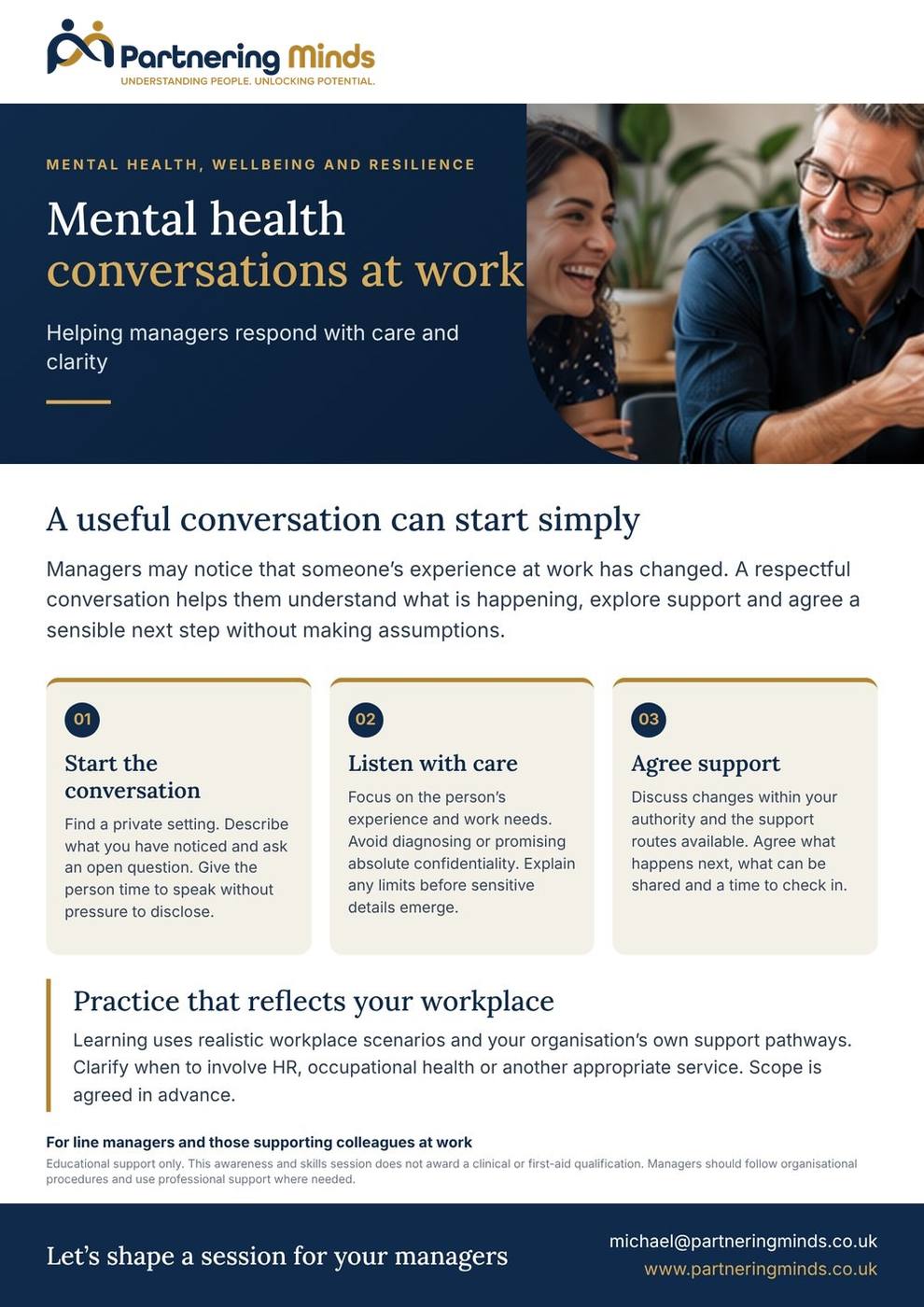
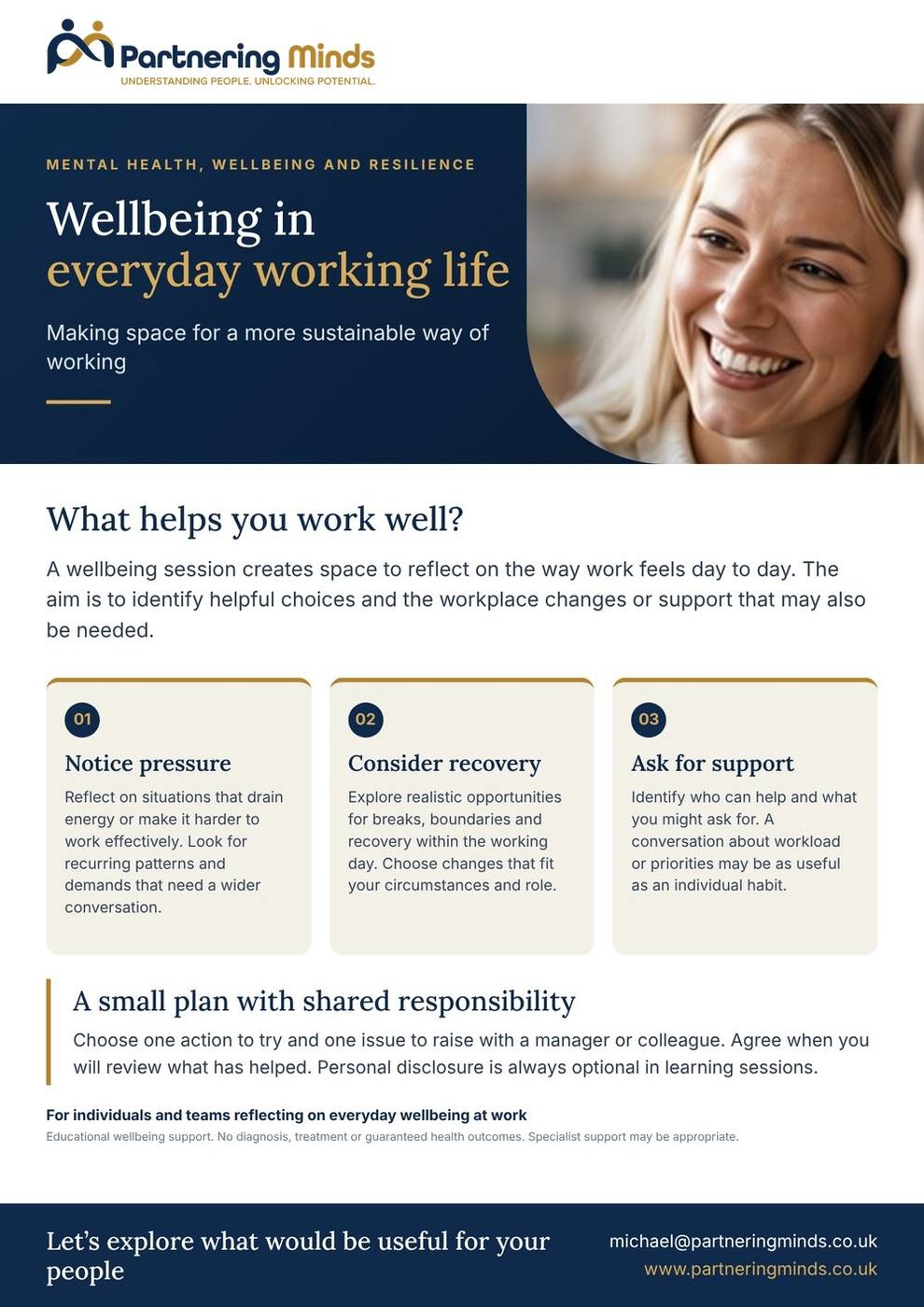
Four short leaflets for employers, managers and teams. Tap any leaflet to see it full size.
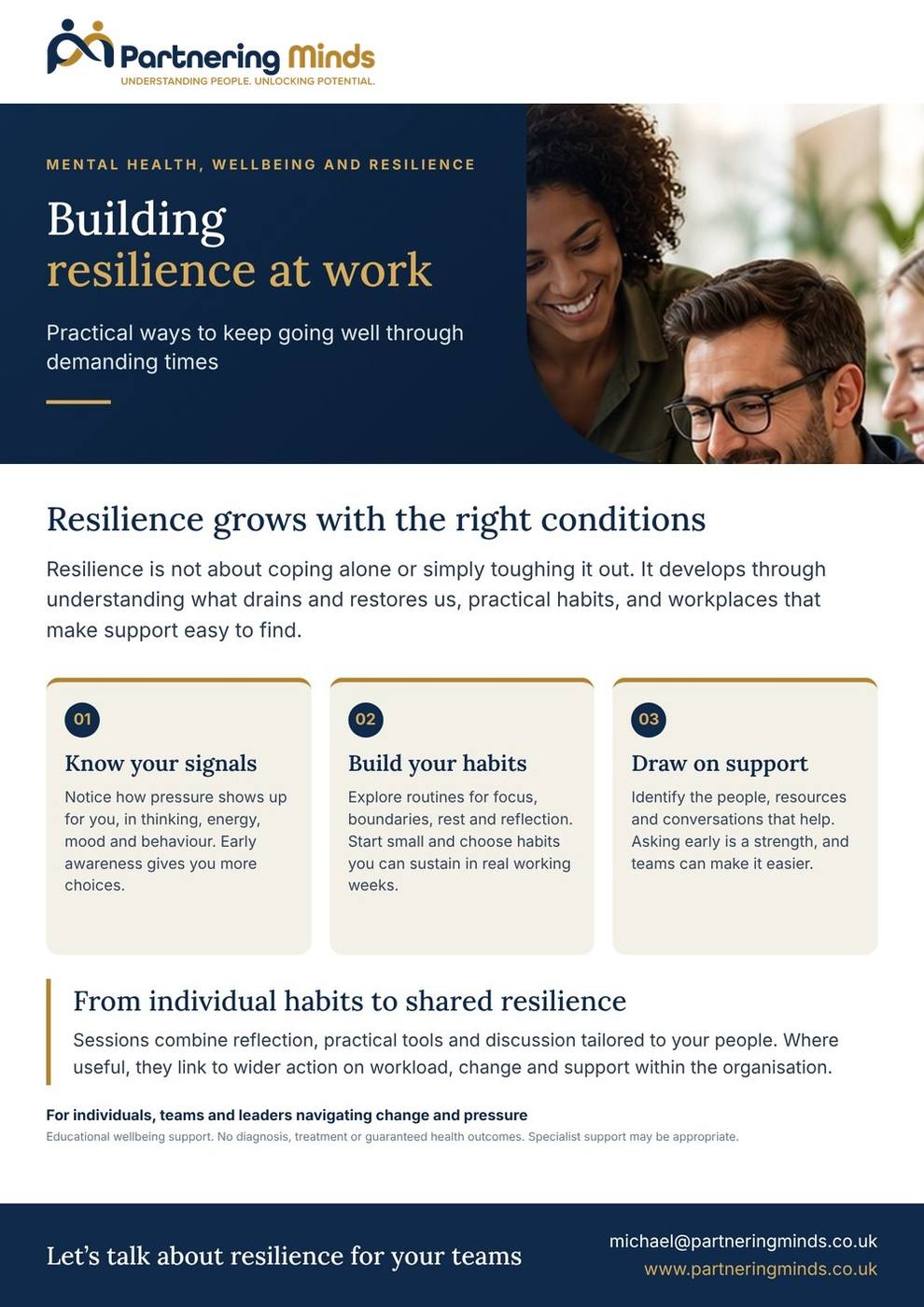
How we work together
From first conversation to practical change.
Step 1
Understand the need
We discuss the people, pressures and intended outcome. Together we identify whether the priority is first aid skills, everyday management practice or a separate development programme.
Step 2
Agree the right route
For MHFA England training, we confirm the exact course, format and learner requirements. For resilience work, we agree a distinct scope, objectives and follow-up.
Step 3
Create a respectful learning space
We explain boundaries and support routes, and use relevant scenarios without asking people to disclose personal experiences. We discuss accessibility and participation needs in advance.
Step 4
Support application
For MHFAiders, plan organisational support and a refresher route. For coaching and team development, review the agreed actions and address barriers with the people able to change them.
Questions and responsible use
What to know before you begin.
What do MHFA learners receive?
The provider currently lists a digital MHFAider certificate, manual, workbook, action-plan reference card, Association membership and three years’ access to the MHFAider Support App. Inclusions are confirmed at booking.
How often should MHFAiders refresh?
MHFA England recommends its four-hour Refresher every three years. It renews skills and provides a further three years of certification and Association membership.
Is the RSPH Level 3 Award included?
Not automatically. MHFA England presents the RSPH Level 3 Award in Mental Health First Aid as a further qualification opportunity; standard course completion does not award it.
Will resilience coaching prevent burnout?
No programme can guarantee that. Coaching may help people recognise pressures and make changes, but workload, resources, relationships and management practices also need attention. Resilience should never mean tolerating harmful conditions.
Can training be online or in person?
Both. MHFA England courses can be delivered virtually or face to face. We confirm the exact format, group size and learner requirements when we agree the route.
Does a first aider replace professional support?
No. MHFAiders offer initial support and signposting within their training. They are not therapists or an emergency service, and they do not diagnose or treat.
Using the approach responsibly
MHFAiders provide initial support and signposting within their training; they are not therapists or an emergency service. We explain confidentiality and its safety-related limits, and avoid collecting sensitive personal stories in enquiry forms or sharing them in workshops. Coaching is developmental, with clear boundaries and referral to appropriate support when needs exceed its scope. Participation should not require personal disclosure, and training and coaching do not replace organisational action on work-related stress.
If you need support now
Samaritans: call 116 123, free, any time.
Shout: text SHOUT to 85258, free, 24/7.
In an emergency, call 999.
A useful next conversation
You do not need to arrive with a course name or a finished wellbeing plan. Tell us what is happening in your workplace and we can explore a useful next step.
We think better when we don’t think alone.