Insights Discovery

Understanding people. Unlocking potential.

Insights Discovery

Understand your differences and work better together

When a team is working hard but still talking past one another, another perspective can help. Insights Discovery gives people a memorable language for exploring how they communicate, make decisions and work with others. We help turn that understanding into more useful conversations and practical changes at work.

What it is

A personal and team development tool.

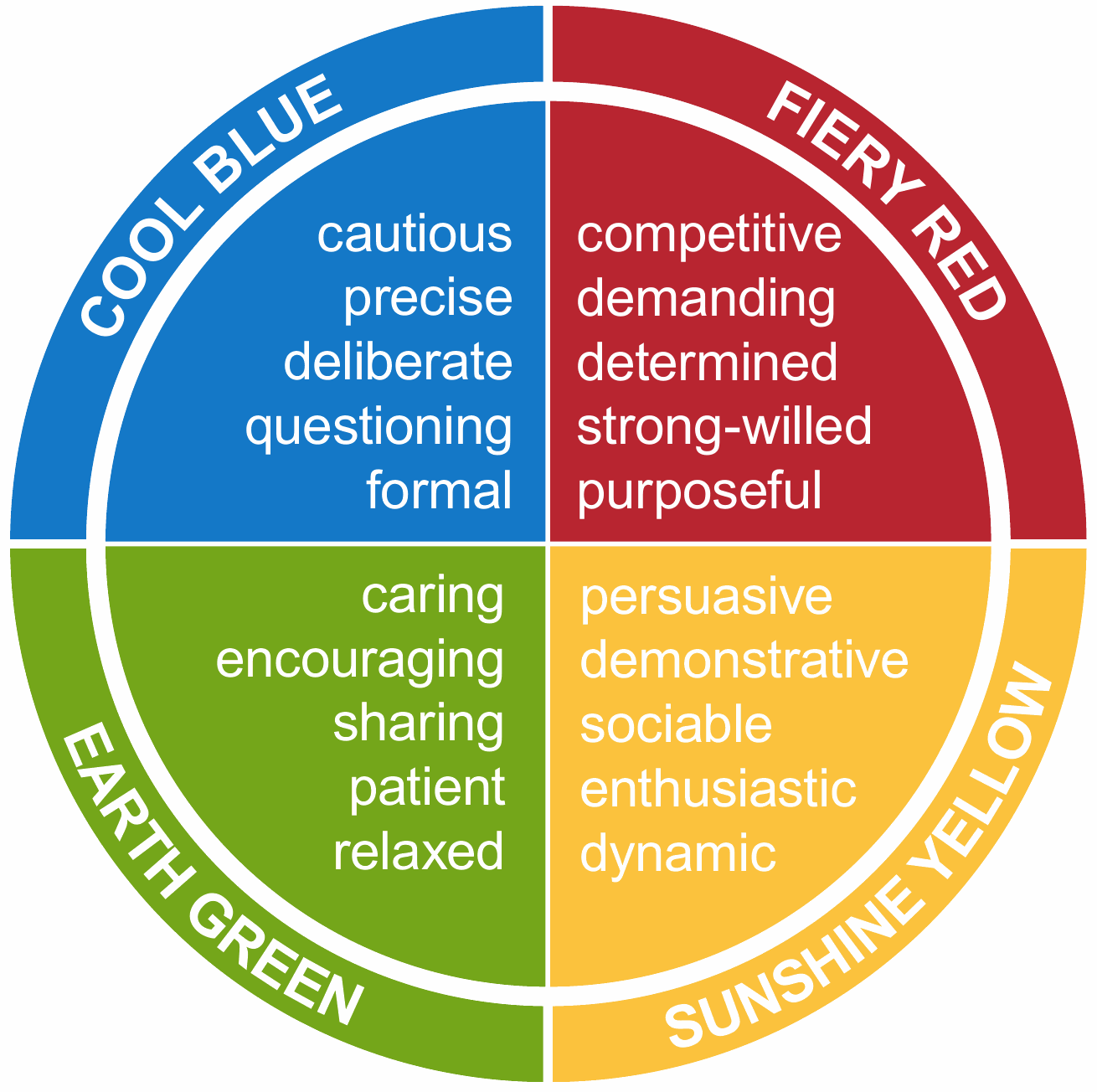
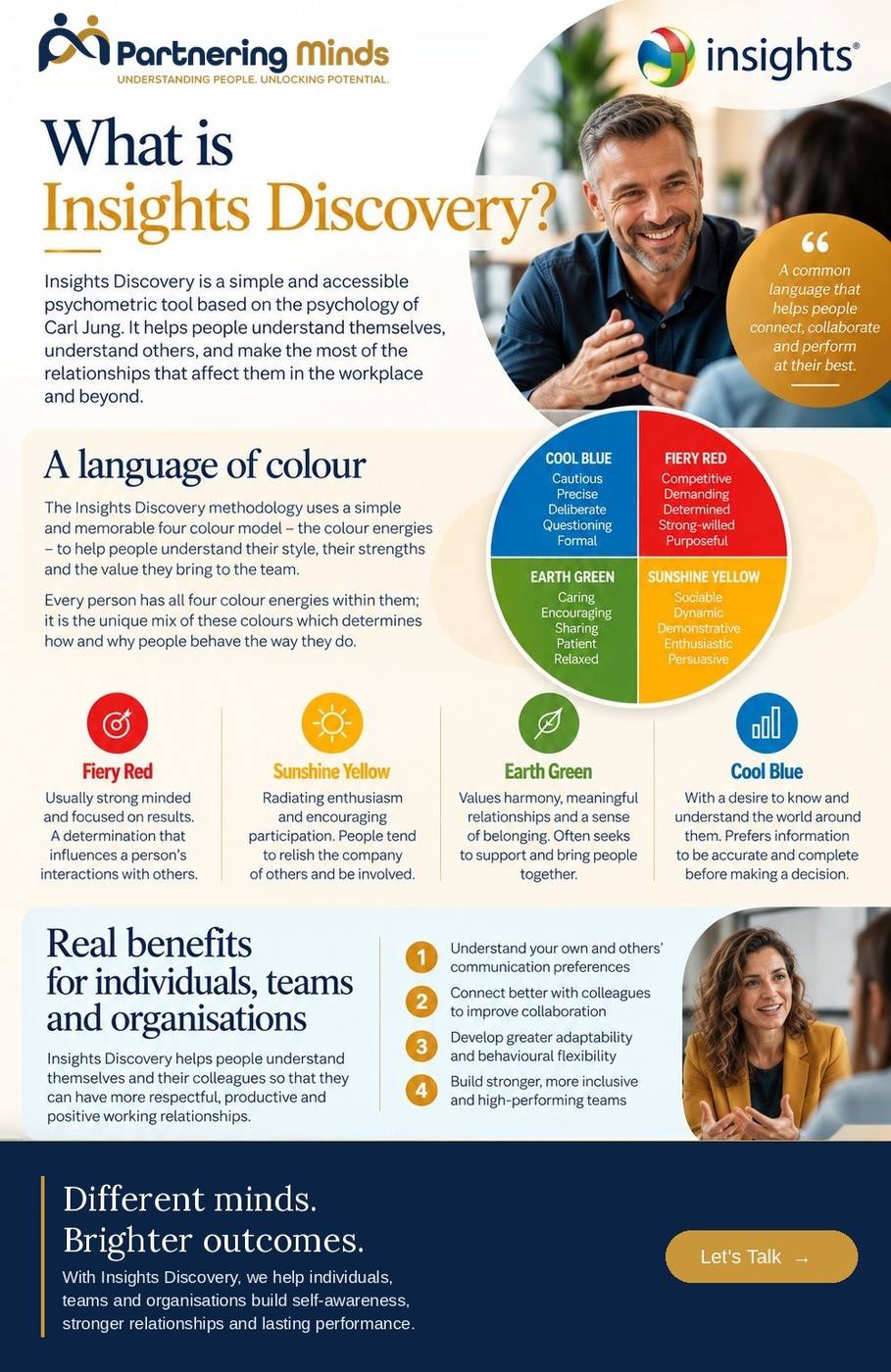
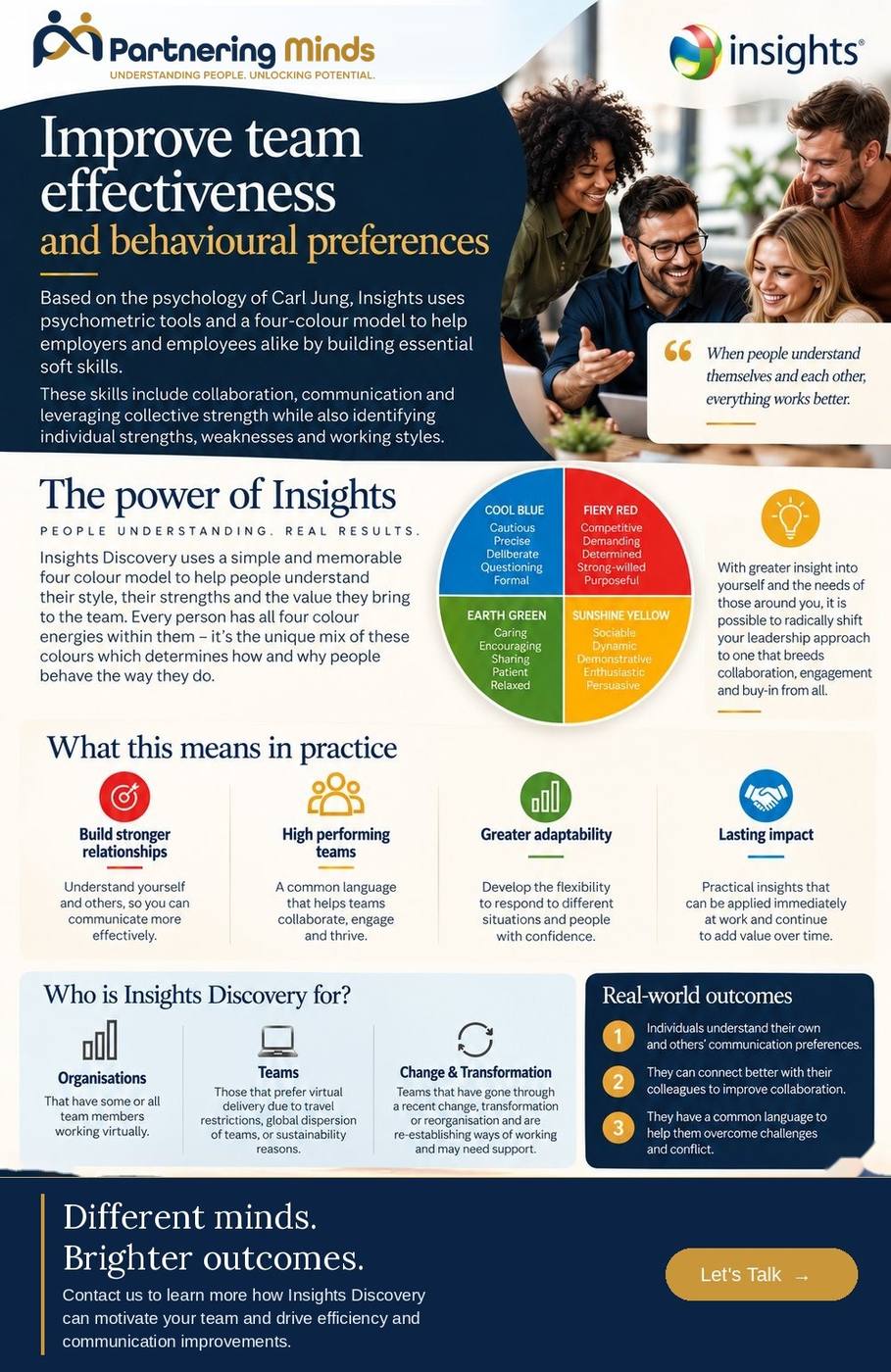
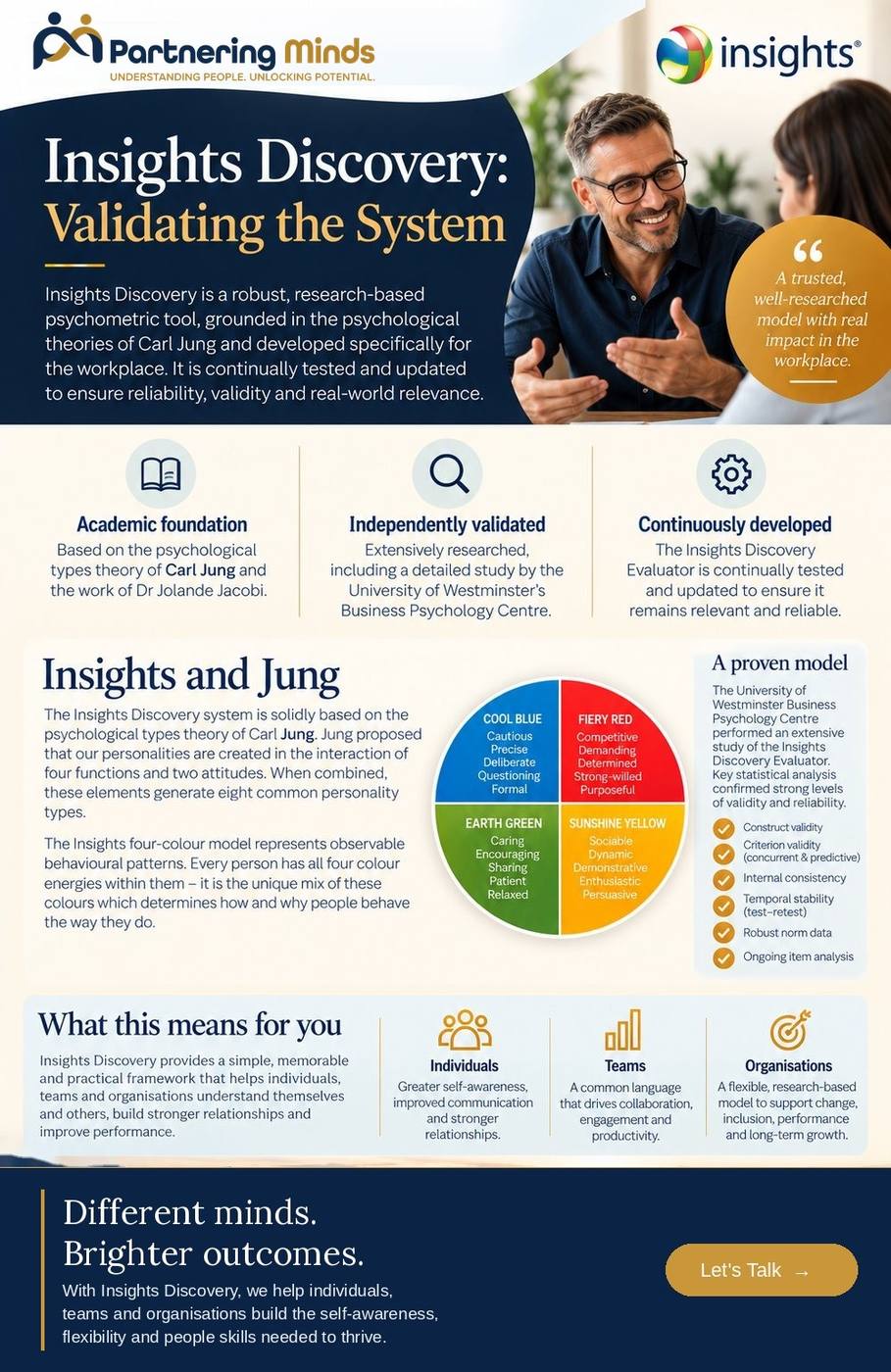
Insights Discovery is grounded in Jungian psychology. An online evaluator generates a Personal Profile exploring behavioural preferences, strengths, communication and possible blind spots. Its four colour energies make these ideas easy to remember and discuss. Everyone has a blend of all four; a person is never simply one colour.

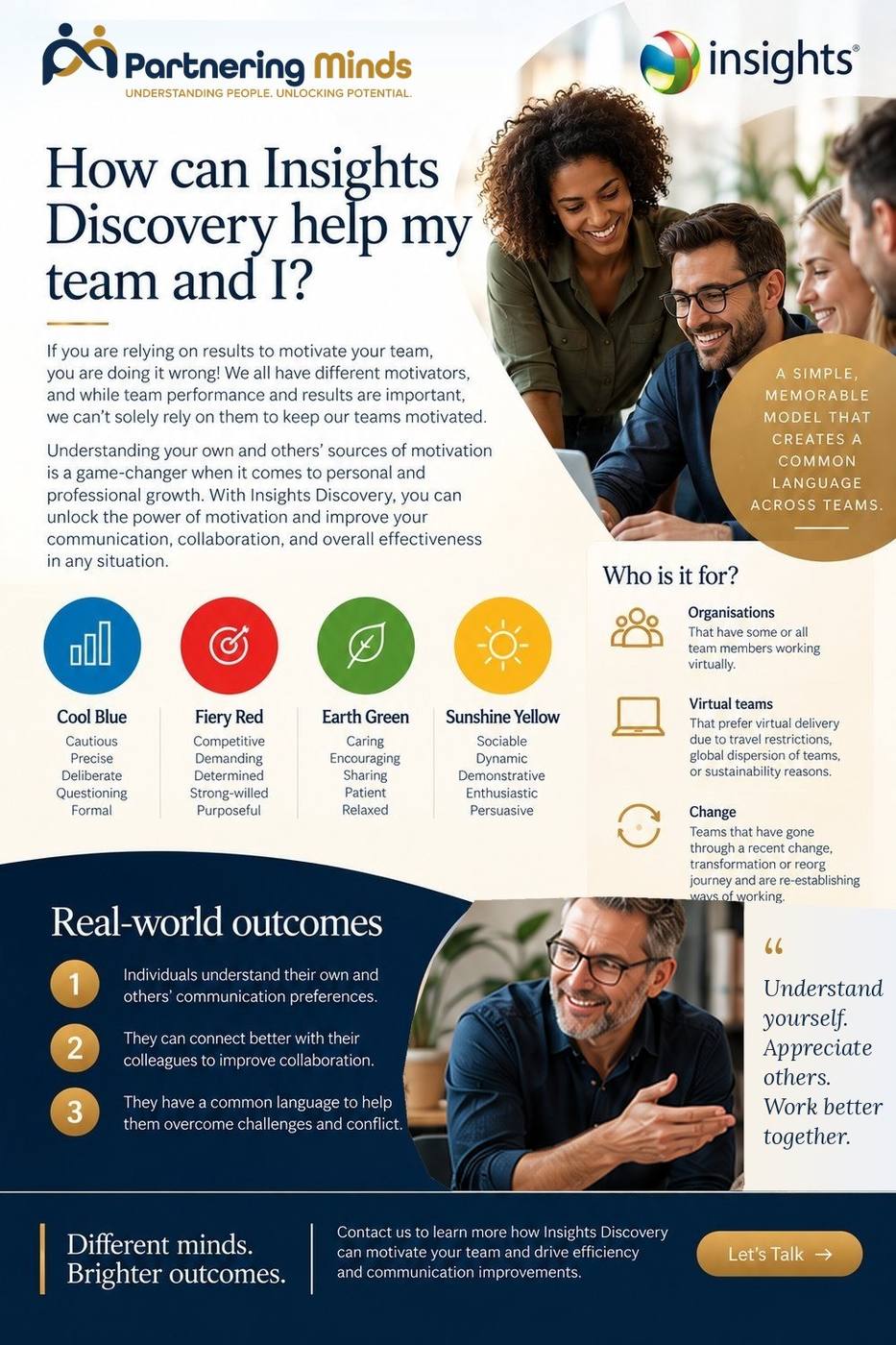
The four Insights Discovery colour energies: Cool Blue, Fiery Red, Earth Green and Sunshine Yellow, each with five descriptive words

Fiery Red

A preference for purposeful action, direct communication and results.

Sunshine Yellow

A preference for enthusiasm, interaction and exploring possibilities.

Earth Green

A preference for consideration, supportive relationships and a steady pace.

Cool Blue

A preference for careful analysis, precision and well considered detail.

Your profile

From a short evaluator to a profile that sounds like you.

The Foundation chapter is the starting point: your personal style, strengths and possible blind spots, how you communicate and suggestions for development. Management, Personal Achievement and Effective Selling content can be added for particular development needs.

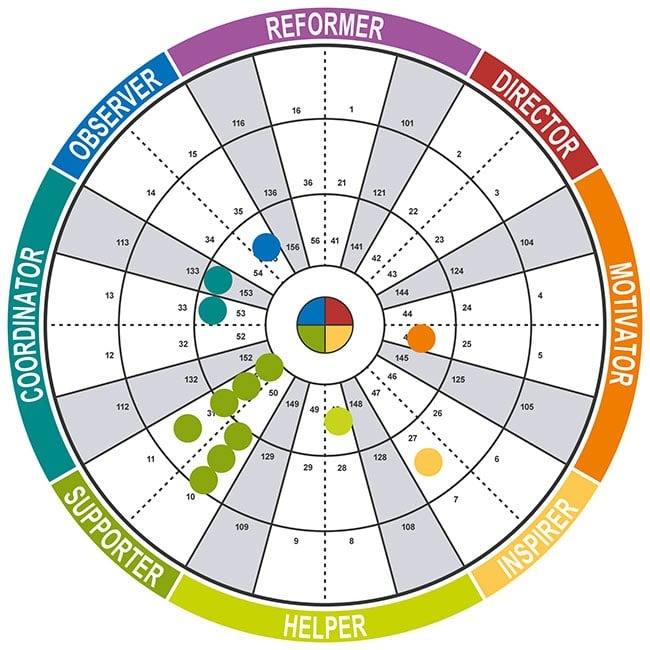
Your position on the Insights Discovery Wheel shows how your preferences sit across eight types.

An example Insights Discovery Wheel, with eight types around the outside and a person's preferences plotted across it

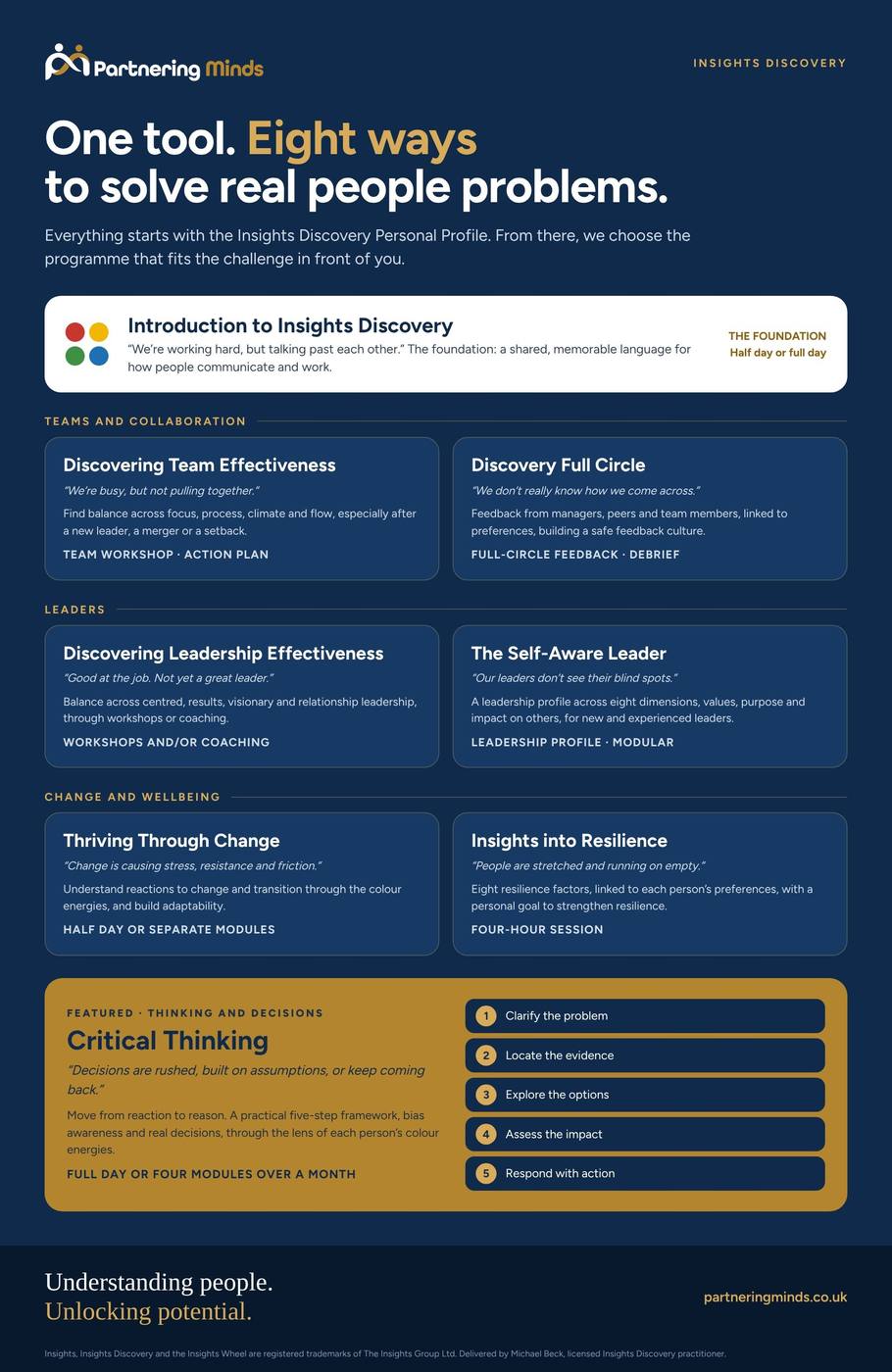
One tool, eight solutions

What problem are you trying to solve?

Insights Discovery is far more than a one-off colours workshop. Once your people have their profile, the same language can be used to tackle very different challenges, from team dynamics and leadership to change, resilience and better decisions.

The foundation

Introduction to Insights Discovery

“We’re working hard, but talking past each other.”

Everyone completes the short online evaluator and receives their Insights Discovery Personal Profile. In a practical workshop, people explore the four colour energies, their own style, and how to connect with colleagues who see things differently.

  • A shared, memorable language for working together
  • Clearer communication and fewer misunderstandings
  • The starting point for every other programme here

Half day or full day · in person or virtual

Teams

Discovering Team Effectiveness

“We’re busy, but we’re not pulling together.”

For teams at a defining moment: a new leader, two teams merging, a setback, or a push to the next level. Using profiles and the Team Wheel, the team looks at four areas: focus (shared purpose and results), process (skills, priorities and measures), climate (trust, candour and cohesion under pressure) and flow (open dialogue, new ideas and agility).

  • A team that understands its own balance and blind spots
  • Problems named and tackled, not talked around
  • A clear, practical team action plan

Facilitated team workshop, one or more sessions

Feedback and collaboration

Discovery Full Circle

“We don’t really know how we come across to each other.”

Combines each person’s Insights Discovery profile with feedback from their manager, peers and team members, so they can see how their communication and working style is experienced by others. Because it’s based on preferences rather than performance ratings, it feels safer and builds psychological safety.

  • A full-circle view of strengths and blind spots
  • A personal action plan for stronger working relationships
  • A healthier, more open feedback culture

Online feedback · one-to-one debrief · pairs well with other programmes

Leaders

Discovering Leadership Effectiveness

“Our managers are good at the job, but not yet great leaders.”

Explores four areas of leadership: centred (self-awareness, values and presence), results (focus, priorities and rigour), visionary (direction and seeing possibilities) and relationship (trust, respect and collaboration). Leaders see where they are naturally strong, and where to build balance.

  • Leaders who understand their own leadership style
  • A more rounded, balanced approach to leading
  • More motivated, engaged and productive teams

Workshops, coaching, or both

Leaders

The Self-Aware Leader

“Our leaders don’t see their blind spots, or the impact they have.”

Each leader receives a leadership-specific profile across eight leadership dimensions, from delivering results to creating a compelling vision. Through reflection, group discussion and goal setting, they explore their leadership style, blind spots and biases, their purpose and values, and the impact they have on others.

  • Greater self-awareness, the strongest foundation for leading well
  • Clear personal leadership goals
  • Relevant for new and experienced leaders alike

Leadership profile · modular workshops, focused where needed

Change

Thriving Through Change

“Change is causing stress, resistance and friction.”

Helps people understand their own and others’ reactions to change. It covers the difference between change and transition, the phases people move through, how each colour energy tends to react under the pressure of change, and how to build adaptability with a “beginner’s mind”.

  • Less resistance, and more empathy for how others react
  • Better conversations about change at every level
  • Greater resilience and adaptability

Half day, or separate modules · with digital follow-up resources

Wellbeing

Insights into Resilience

“People are stretched, and running on empty.”

What resilience really is (and isn’t), how we each respond to pressure, and eight resilience factors to check against. People explore what fills and drains their resilience, how their colour preferences shape the factors they naturally use, and how to draw on less familiar ones.

  • A practical understanding of personal resilience
  • Each person leaves with a clear resilience goal
  • A follow-up to see what people are putting into practice

Four-hour session · links with our wellbeing work

Featured · Thinking and decisions

Critical Thinking

“Decisions are rushed, built on assumptions, or keep coming back to the table.”

Helps people move from reaction to reason. Using a Critical Thinking chapter in their Insights Discovery profile, people see how their preferences shape the way they notice information, form judgements and respond under pressure. They then practise a simple five-step framework on realistic decisions, learn to spot bias, and apply it to a real decision of their own.

Full day, or four shorter modules over a month · with follow-up at day 30

Explore Critical Thinking
  1. Clarify the problem
  2. Locate the evidence
  3. Explore the options
  4. Assess the impact
  5. Respond with action

Featured programme

Critical Thinking: from reaction to reason.

Under pressure, we all fall back on habits: jumping to conclusions, waiting for perfect information, avoiding the difficult question or going with the most exciting idea. Critical Thinking gives people a practical, repeatable way to pause, question their first reaction and make decisions that hold up.

“Reasonable, reflective thinking, focused on deciding what to believe or do.”Robert Ennis, 1962
  1. 1

    Clarify the problem

    Get clear on what you’re actually solving, not the first thing that looks like a problem.

  2. 2

    Locate the evidence

    Gather what you need, and look for the data that tells you something you didn’t expect.

  3. 3

    Explore the options

    Map the realistic alternatives, including those your preferences steer you away from.

  4. 4

    Assess the impact

    Name the trade-offs: what you gain, what you lose and what you’re choosing to accept.

  5. 5

    Respond with action

    Commit to a decision grounded in evidence, with the reasoning visible and the trade-offs known.

From understanding to practical progress

Getting the best out of people and teams.

Know your impact

Notice where your preferred approach helps and where you may need to adapt.

Connect across differences

Ask what someone else needs from a conversation rather than assuming they work as you do.

Make collaboration easier

Create practical agreements about meetings, feedback and decisions.

Where it can help

Where this can make a difference.

Teams finding their rhythm

Use the Team Wheel to explore the group’s blend of preferences. Discuss whose views get heard, how decisions are made and which approaches need more space. The wheel is a conversation aid, not a measure of team quality.

Leaders adapting their approach

Explore how you brief, delegate and give feedback. Practise adjusting your communication to the individual and situation, while keeping expectations clear.

Teams navigating change

Surface different needs for detail, pace, involvement and reassurance. Agree how change updates will work and how people can raise concerns.

Coaching and relationship development

Use the profile as a starting point for reflection on real interactions. Turn a recurring frustration into a specific conversation or behaviour to try.

New teams and new managers

Help a newly formed team, or a manager taking over an existing one, get to know each other quickly. Share preferences early, agree how you’ll communicate and avoid months of misunderstanding.

Customer and colleague conversations

Recognise the different energies of the people you serve and work with. Adapt how you open a conversation, share information and handle concerns so it lands well with each person.

One-page guides

Insights Discovery at a glance.

Short visual guides you can view, share with colleagues or bring to a conversation. Tap any guide to see it full size.

How we work together

From first conversation to practical change.

Step 1

Start with the real challenge

We discuss what is happening in your team and what you would like to work differently. We agree the purpose, participants and how profile information will be shared.

Step 2

Explore the profile

Participants complete the evaluator and receive supported feedback. We discuss what resonates, what needs context and what is worth exploring further.

Step 3

Apply the learning

A facilitated workshop or coaching conversation connects the profiles with your work. Where appropriate, a Team Wheel helps the group explore its dynamics.

Step 4

Make it useful

Agree a small number of actions, such as a clearer meeting structure or a different approach to feedback. A follow-up conversation can review what people have tried and what changed.

Questions and responsible use

What to know before you begin.

Will we be put into boxes?

No. Your profile describes you; it doesn’t define you. No colour energy or wheel position is better than another. The purpose is to increase choice and adaptability, not excuse behaviour.

Can we add more detail to the profile?

The Foundation chapter provides the starting point. Management, Personal Achievement and Effective Selling content may support particular development needs. We agree the relevant report options before ordering.

Can we use it to select people for jobs?

This Partnering Minds offer is for development. Do not use colour preferences to screen candidates, allocate opportunities or decide who can lead. Consider relevant capabilities and evidence of performance.

Does one workshop change a team?

A workshop creates a starting point. Progress depends on the team applying the learning, addressing wider issues and reviewing its actions over time.

How long does it take?

The online evaluator takes around 20 minutes. A personal feedback session usually takes about an hour, and team workshops run from a half day to a full day, depending on what you want to achieve. We agree the format around your diary.

Who sees my profile?

Your profile belongs to you. In a team session, people choose what they share, usually just their colour energies and position on the Team Wheel. We agree in advance what, if anything, is shared more widely, and full profiles are never circulated without your agreement.

Using the approach responsibly

Profiles reflect responses to an evaluator and simplify complex behaviour. Interpretation should allow for context, language, culture and the participant’s own view. Share profiles and Team Wheels only under an agreed information-sharing plan; explain provider data arrangements before participation. Do not display named wheel positions publicly or use colours as labels, rankings or diagnoses.

A useful next conversation

If communication keeps getting in the way, let’s look at what is happening beneath it. You do not need to know which workshop or profile you need before we talk.

We think better when we don’t think alone.

  • ICF Professional Certified Coach
  • Insights Discovery Licensed Practitioner
  • Hogan certified
  • EQ-i 2.0 certified
  • Belbin
  • SLII Qualified Facilitator
  • Accredited Mediator, UK Mediation
  • MHFA England Instructor Member
  • Certified NLP Practitioner
  • Certified NLP Master Practitioner
  • Certified in Applied Neuroscience